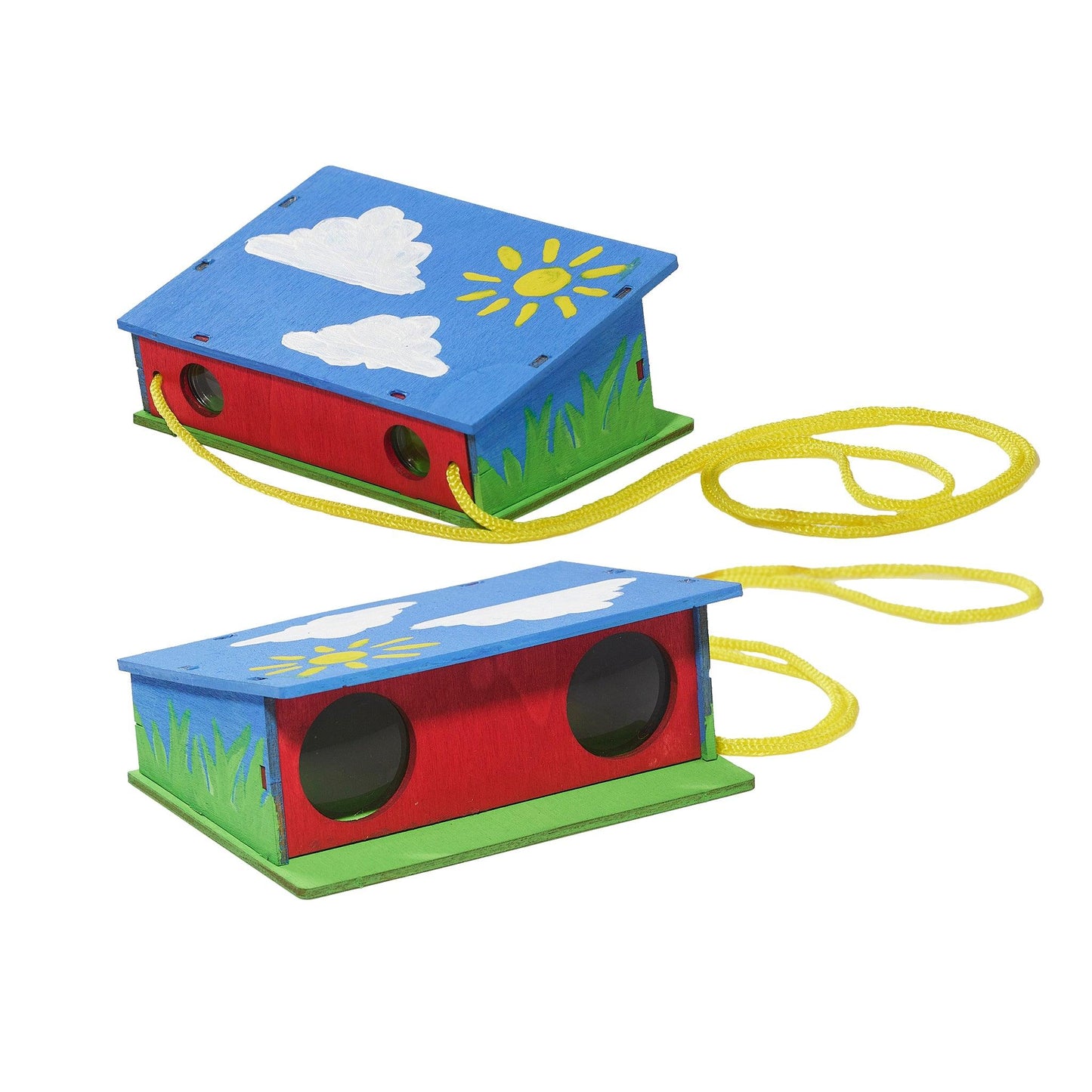
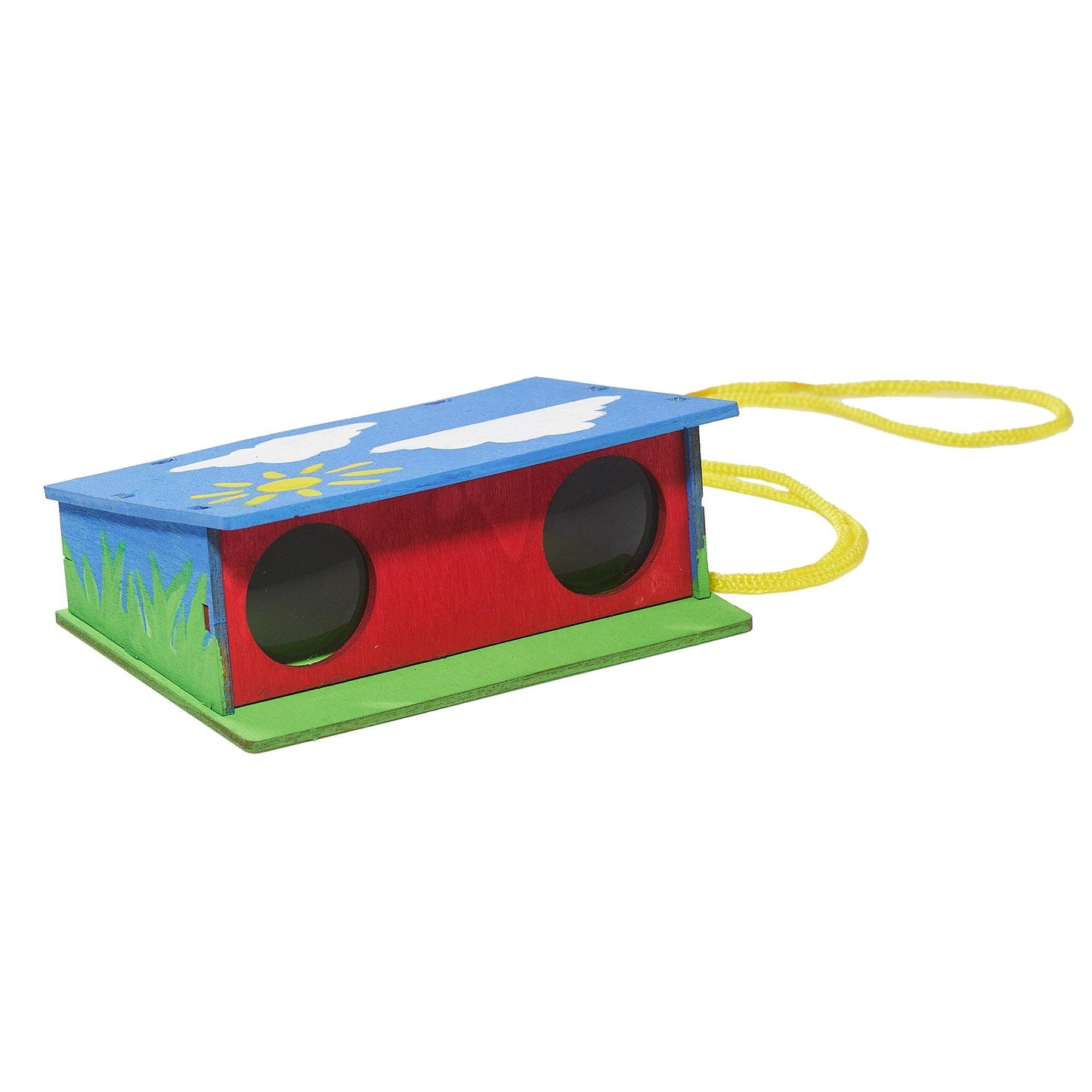
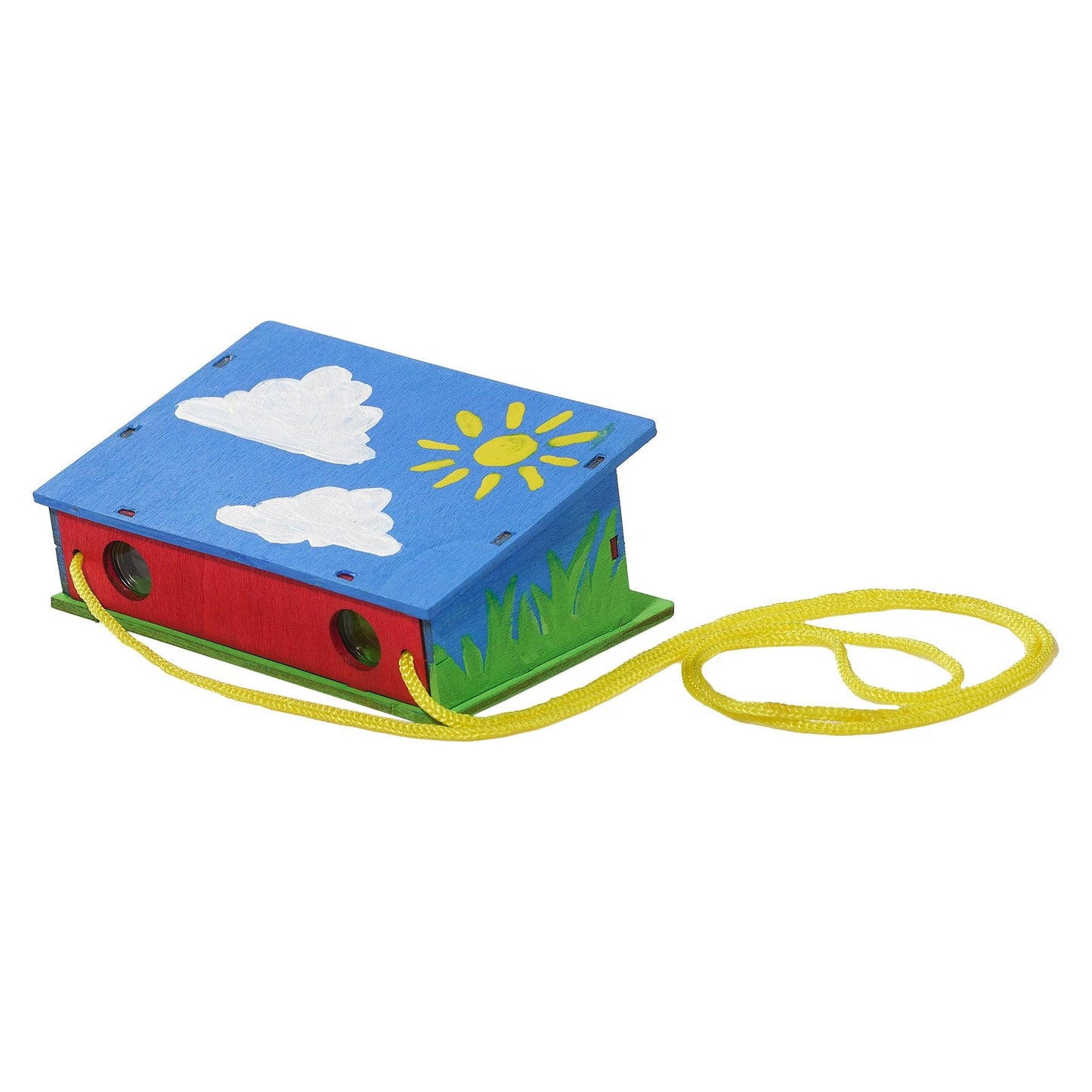
Calling all explorers, adventurers, and curious young minds! Build, decorate, and discover the world through your very own DIY Wooden Binoculars! These aren't just pretend explorer accessories. They're working binoculars with real magnifying lenses that let kids get a closer look at the world around them! Assemble the wooden pieces, customize them with colorful designs, and head outside for birdwatching, nature walks, wildlife observation, scavenger hunts, and exciting discovery missions. It's a hands-on craft that transforms into a real exploration tool!
Build Real Binoculars, Decorate Your Gear, and See the World Up Close!
Imagine the excitement of building your own binoculars, decorating them with your favorite colors, and then actually using them to see distant objects more closely! These DIY Wooden Binoculars combine hands-on construction, creative expression, and real magnification in one unforgettable project. Children don't simply make an explorer-themed decoration. They create a functional pair of binoculars that they can use for observation and discovery.
The real magnifying lenses are what make this craft especially exciting. Once assembled, the binoculars allow children to look through the lenses and see an enlarged view of what they're observing. Whether they're watching birds perched in trees, examining distant features in a landscape, or exploring their surroundings during a supervised nature walk, the finished project gives them a genuine reason to get outside and investigate.
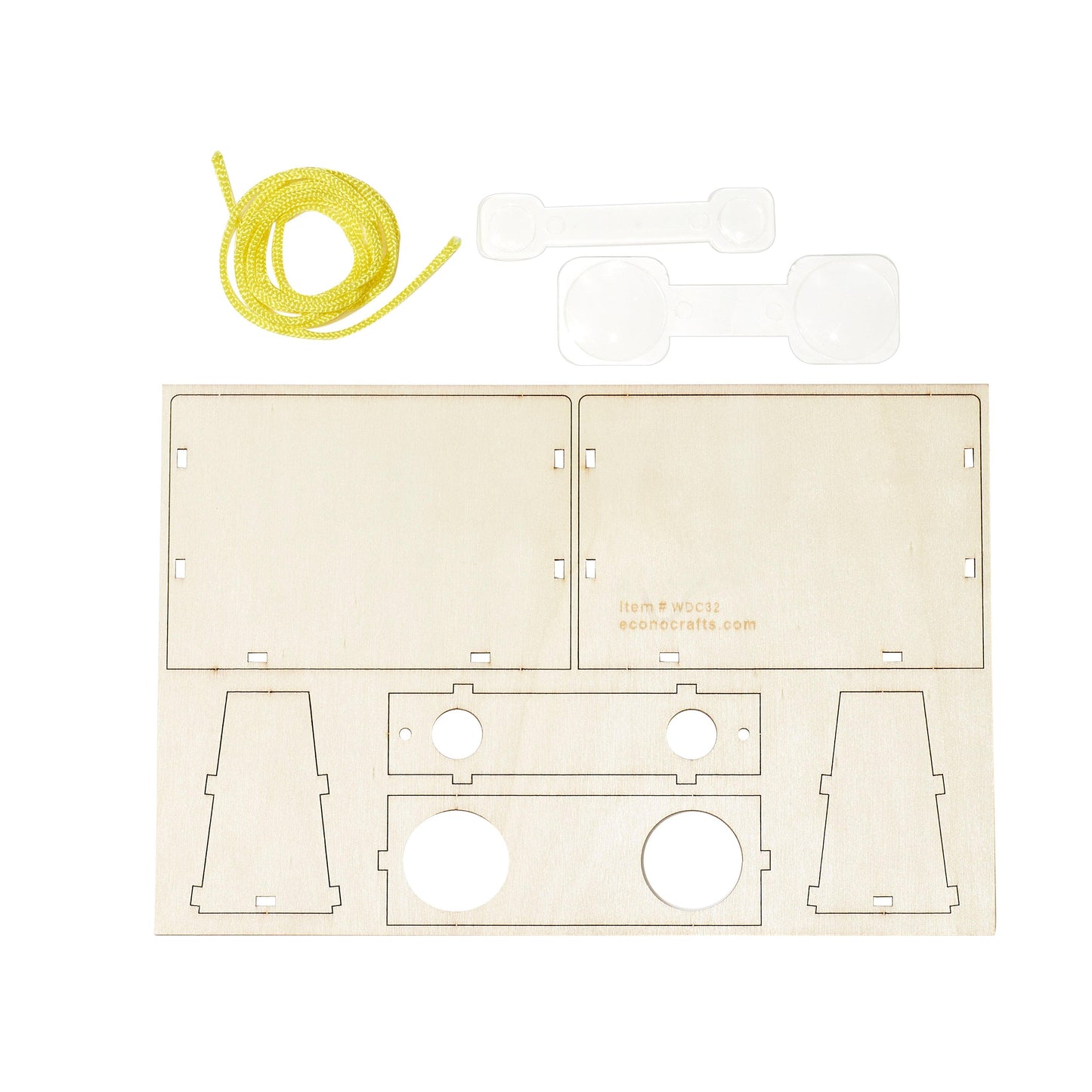
The experience begins with a collection of unfinished wooden pieces, magnifying lenses, and string. Participants can decorate the wooden components, assemble their binoculars, and discover how the lenses transform their handmade creation into a working observation tool. Seeing the finished project actually magnify objects adds a wonderful sense of accomplishment to the building process.
Children can personalize their binoculars with practically any theme they can imagine. Paint them with green and brown camouflage for a wilderness adventure, create tropical animal patterns for a jungle safari, or use bright camp colors and personalized lettering. Add names, initials, explorer badges, decorative stripes, or creative geometric designs to make every pair unique.
For summer camps, this project offers an exciting combination of arts and crafts and outdoor recreation. Campers can build and decorate their binoculars during a morning activity, then head outside for an afternoon of birdwatching, wildlife observation, and nature exploration. The same project can become the foundation for an entire day of discovery-themed programming.
Imagine organizing a campwide explorer challenge where each cabin designs its own binoculars, chooses a team name, and receives a list of objects to observe. Campers might look for a bird sitting on a distant branch, identify details on a building, examine features of a faraway tree, or compare what they can see with and without magnification. Their handmade binoculars become essential equipment for the adventure.
Birdwatching is an especially natural activity for these binoculars. Children can learn to recognize birds by their colors, markings, shapes, and behavior while observing them from an appropriate distance. Teachers and activity leaders can introduce common local birds, explain how to observe wildlife respectfully, and encourage participants to record what they discover in simple observation journals.
The binoculars also provide an engaging introduction to optics, the science of light and lenses. Students can explore how magnifying lenses change the appearance of objects and compare observations made with their eyes alone and through the completed binoculars. They can investigate which details become easier to notice, discuss the purpose of magnification, and discover why optical instruments are useful in science and everyday life.
Unlike pretend binoculars that only resemble exploration equipment, these working binoculars create an opportunity for meaningful hands-on scientific observation. Children can experiment with viewing different objects, describing what changes when they use magnification, and learning how scientists use optical tools to gather information about the natural world.
The construction process offers another valuable learning experience. Participants can examine the wooden pieces, identify the lens openings, and see how individual components fit together to form a recognizable, functional object. Assembling the binoculars encourages spatial awareness, sequencing, fine motor coordination, and practical problem-solving.
Decorating the unfinished wood adds an artistic dimension to the project. Children can practice using paintbrushes, experiment with color combinations, and create detailed patterns with paint pens or markers. Younger participants within the recommended age range may prefer bright colors and simple stripes, while older children can create realistic camouflage, animal prints, or intricate explorer-themed artwork.
Schools can incorporate these binoculars into science lessons about light, lenses, observation, wildlife, habitats, and the environment. Students might build their binoculars before a nature study, use them to compare distant objects, or participate in a supervised outdoor investigation. The project makes scientific observation more memorable because students are using equipment they assembled themselves.
After-school programs can turn the craft into a complete explorer experience. Begin with decorating and assembly, then move into a guided observation challenge or scavenger hunt. Children can work individually or in teams, using their binoculars to identify distant clues, spot wildlife, or discover details they might otherwise overlook.
The project also works beautifully with seasonal activities. In spring, children can observe birds, budding trees, and signs of changing weather. Summer brings camp adventures, park exploration, and outdoor wildlife observation. Fall offers opportunities to examine colorful trees and changing landscapes, while winter can inspire birdwatching, supervised outdoor discovery, and observation activities near windows.
Libraries and community centers can combine the project with books about explorers, animals, nature, and scientific discoveries. Children can learn about the role of binoculars in wildlife research, conservation, and outdoor recreation, then use their handmade creations during a supervised observation activity.
Parks and recreation programs can use the binoculars to introduce children to birdwatching and nature appreciation. Participants can learn to observe wildlife from a respectful distance, compare different natural environments, and discover how much detail becomes visible when they use magnification. These experiences can encourage curiosity about the outdoors and a greater appreciation for the environment.
For birthday parties and special events, the binoculars make a memorable craft and take-home gift. Guests can decorate their own working binoculars, participate in an explorer challenge, and leave with something they can actually use again. It's a party activity that combines creativity, discovery, and lasting enjoyment.
Each finished pair measures 4¼" × 2¹⁵⁄₁₆". The pack includes 12 individual binocular projects with unfinished wooden components, real magnifying lenses, and wearing string. Recommended for ages six and up, these kits are ideal for classrooms, summer camps, after-school programs, libraries, recreation centers, and other group activities. Paint, markers, and optional decorating supplies are sold separately.
Whether you're organizing a birdwatching adventure, a classroom optics lesson, a summer camp safari, a nature scavenger hunt, or a family exploration day, these wooden binoculars offer something truly special. Children get to experience the satisfaction of building their own equipment, the creativity of personalizing it, and the excitement of actually using it to discover the world around them!
Why Choose This DIY Wooden Binoculars Craft Kit?
- Features real magnifying lenses that allow children to use their finished binoculars for actual observation
- Combines hands-on construction, creative decorating, and functional exploration equipment in one exciting project
- Children build their own working binoculars rather than simply decorating a pretend explorer accessory
- Unfinished wooden surfaces are ready for colorful paint, camouflage patterns, animal prints, and personalized designs
- Includes a wearing string so participants can conveniently carry their completed binoculars during supervised adventures
- Encourages curiosity, observation, scientific thinking, creative problem-solving, and appreciation for nature
- Introduces basic optics concepts through hands-on exploration of magnification and lenses
- Perfect for birdwatching, nature walks, wildlife observation, outdoor exploration, and discovery challenges
- Supports fine motor coordination, spatial awareness, artistic planning, and confidence in building
- Includes 12 individual projects, making it ideal for classrooms, camps, and group activities
Teacher Tip
Turn this project into a "Build Your Own Binoculars: The Science of Seeing" STEAM adventure! Begin by introducing the concept of magnification and explaining how lenses can change the way objects appear. Show students examples of optical tools such as magnifying glasses, binoculars, microscopes, and telescopes, and discuss how people use them to observe details that may be difficult to see with their eyes alone. Next, provide each participant with a DIY Wooden Binoculars kit and invite them to decorate the unfinished wooden pieces with nature-inspired colors, explorer patterns, or personalized designs. Once the paint has dried, guide students through assembling the binoculars and installing the real magnifying lenses. Before heading outside, organize a simple observation experiment. Position a few safe objects or picture cards at different distances and ask students to describe what they can see without binoculars. Then have them look through their completed binoculars and compare the appearance of the same objects. Encourage students to record which details become easier to recognize and discuss how magnification changes their observations. For the next activity, take the group on a supervised nature walk or birdwatching adventure. Provide an observation checklist featuring birds, trees, flowers, landscape features, and other objects that can be viewed safely from a distance. Students can use their binoculars to examine details, identify colors and patterns, and record their discoveries through drawings or written descriptions. Finish with a "Young Scientists Discovery Gallery" where participants share what they observed, explain how their binoculars helped, and discuss why optical instruments are valuable tools for scientists and explorers. This hands-on lesson combines optics, engineering, artistic creativity, scientific observation, environmental awareness, and critical thinking. Always remind participants never to look at the sun through binoculars or any other magnifying lenses.
Product Highlights
-
12 DIY Wooden Binoculars – A convenient group pack of build-and-decorate projects
-
Real Magnifying Lenses – Functional lenses allow children to observe objects with magnification
-
Working Binoculars – The finished project becomes a usable observation tool rather than a pretend accessory
-
Measures 4¼" × 2¹⁵⁄₁₆" – Compact binoculars designed for young explorers
-
Unfinished Wooden Components – Ready for colorful decorating and hands-on assembly
-
Wearing String Included – Allows participants to carry their binoculars during supervised exploration activities
-
Hands-On STEM & STEAM Learning – Introduces optics, magnification, construction, observation, and scientific inquiry
-
Outdoor Adventure Ready – Great for birdwatching, nature walks, wildlife observation, and explorer challenges
-
Creative Personalization – Decorate with camp colors, camouflage, animal patterns, names, and imaginative designs
-
Recommended for Ages Six & Up – A rewarding construction and decorating project for curious young minds
What's Inside This Craft Kit
- Unfinished wooden components for assembling 12 pairs of binoculars
- Real magnifying lenses that make the completed binoculars functional
- String for wearing and carrying the finished binoculars
Supplies You'll Need
Customize your binoculars with colorful Acrylic Paint and Paint Brushes to create camouflage patterns, bright explorer colors, animal prints, and nature-inspired designs. Add names, initials, decorative stripes, leaves, wildlife patterns, and detailed artwork with Acrylic Paint Pens or Permanent Markers. For optional lightweight decorations, use suitable Craft Glue to attach embellishments to the wooden surfaces. Keep paint, glue, and decorative materials away from the magnifying lenses, viewing openings, string attachments, and assembly connections to preserve clear visibility and proper function. Protect your work surface, keep water and paper towels nearby for cleanup, and allow all paint and adhesives to dry completely before installing the lenses and completing assembly.
This Binoculars Craft Kit Is Great For
-
Elementary Schools: Introduce students to real magnification through an exciting build-and-decorate project. Children can assemble working binoculars and use them during lessons about optics, wildlife, habitats, and scientific observation
-
After-School Programs: Turn creative crafting into an engaging discovery adventure. Participants can decorate their binoculars before exploring the outdoors, observing distant objects, and completing supervised nature challenges
-
Summer Camps: Give campers real working explorer equipment they build themselves. Campers can create personalized binoculars for birdwatching, cabin adventures, scavenger hunts, and wildlife observation activities
-
STEM & STEAM Programs: Explore the science of lenses, magnification, observation, and hands-on construction. Participants can compare how objects appear with and without binoculars and learn why optical tools are useful
-
Libraries & Storytime Programs: Connect books about nature, wildlife, and exploration with a working science craft. Children can build binoculars inspired by their reading and participate in observation-themed activities
-
Parks & Recreation Programs: Encourage children to explore nature using binoculars they assembled themselves. Participants can observe birds, examine landscape features, and discover details during supervised outdoor programs
-
Churches & Vacation Bible School: Combine creative construction with nature appreciation and discovery. Leaders can incorporate the binoculars into creation-themed activities, outdoor observation, and group exploration challenges
-
Nursing Homes & Senior Centers: Offer an enjoyable wooden craft with a practical, interactive finished result. Participants can decorate binoculars and explore magnification during comfortable seated observation activities
-
Birthday Parties & Special Events: Give guests a memorable craft that becomes a real working take-home gift. Children can personalize their binoculars and use them during explorer-themed games and discovery challenges
-
Families & Kids at Home: Make a working pair of binoculars and discover the world together. Children can enjoy building, decorating, birdwatching, and nature observation with family members
Creative Decorating Ideas & Real-World Explorer Adventures
-
Backyard Birdwatching – Decorate your binoculars with bird-inspired patterns and use the real magnifying lenses to observe birds safely from a distance
-
Jungle Safari Explorers – Paint tropical leaves, animal prints, and bright jungle colors before heading out on a supervised wildlife observation adventure
-
Camouflage Nature Detectives – Create green, brown, and tan explorer gear and use your binoculars to search for interesting details in outdoor environments
-
Camp Cabin Discovery Challenge – Decorate binoculars in cabin colors and organize a friendly competition to identify distant objects, nature features, or hidden clues
-
Magnification Investigation – Compare how selected objects appear with the naked eye and through the working binoculars, then record the differences
-
Wildlife Observation Journal – Pair the binoculars with a notebook and record birds, animals, colors, and patterns observed during nature walks
-
Treasure Hunt Explorers – Hide large picture clues or symbols around a supervised activity area and challenge participants to identify them from a safe distance
-
Spring Nature Watch – Observe birds, budding branches, flowering trees, and other signs of seasonal change
-
Summer Camp Safari – Use the binoculars for outdoor discovery missions, supervised nature observation, and campwide explorer challenges
-
Fall Foliage Explorers – Examine the colors and patterns of distant trees and compare how the landscape changes throughout autumn
-
Winter Birdwatching – Observe birds from a safe indoor window or supervised outdoor location and compare seasonal wildlife activity
-
Optics Science Lab – Explore the purpose of lenses, test magnification, and discuss how optical instruments help people observe distant details
-
Explorer Team Missions – Divide participants into groups and assign observation challenges that encourage cooperation, communication, and attention to detail
-
Landscape Discovery – Use binoculars to compare distant trees, buildings, and natural features while discussing shapes, textures, and perspective
-
Junior Wildlife Researchers – Introduce children to wildlife observation and have them record facts about animals they can safely watch from a distance
-
Around-the-World Explorer Club – Decorate binoculars with travel-inspired designs and use them during geography, nature, and discovery-themed activities
How to Build, Decorate & Use Your Working Wooden Binoculars
Step 1: Prepare Your Craft Station. Place the unfinished wooden binocular components, real magnifying lenses, and wearing string on a clean, protected work surface. Gather acrylic paint, paintbrushes, paint pens, or markers for decorating. Keep the lenses protected and organize each project's components separately to avoid mixing small parts.
Step 2: Examine the Components. Identify the wooden body pieces, lens openings, magnifying lenses, and string attachment points. Discuss how the different components will fit together to create working binoculars. Encourage participants to handle the lenses carefully and avoid touching their surfaces unnecessarily.
Step 3: Choose Your Explorer Design. Decide whether to create camouflage binoculars, safari-inspired gear, colorful camp equipment, or personalized nature explorer accessories. Choose a color palette and plan where names, patterns, or decorative details will appear. Keep viewing openings and assembly connections clear.
Step 4: Paint the Wooden Pieces. Apply thin, even coats of acrylic paint to the unfinished wooden surfaces. Use bright colors, animal prints, camouflage patterns, or other creative designs. Avoid getting paint inside the lens openings or on surfaces that need to fit together during assembly. Allow each coat to dry before adding additional details.
Step 5: Add Personalized Details. Use acrylic paint pens or suitable markers to add names, initials, camp cabin numbers, explorer badges, nature patterns, and decorative borders. Participants can create realistic wilderness equipment or invent imaginative explorer gear with bright colors and playful designs.
Step 6: Allow the Decorations to Dry Completely. Place the painted wooden components in a safe drying area and allow all coatings to dry according to the manufacturer's instructions. Make sure the lens openings and assembly connections remain clear before proceeding. Keep the magnifying lenses separate from wet paint and adhesives.
Step 7: Assemble the Working Binoculars. Fit the wooden pieces together according to the kit's assembly instructions, placing the real magnifying lenses in their intended positions. Check that the components are aligned, the lenses are properly seated, and the viewing openings remain unobstructed. Adult assistance may be helpful during construction.
Step 8: Attach the Wearing String. Thread the included string through the designated attachment points and secure it appropriately. Check that it is firmly attached and comfortable to use. Supervise children when using neck cords, and remove the binoculars during running, climbing, or other activities where the string could become caught.
Step 9: Test the Magnification. Choose a safe object to observe, such as a tree, a distant sign, or a bird perched on a branch. First, look at the object without binoculars and notice the visible details. Then look through the completed binoculars and compare how the object appears with magnification. Encourage participants to describe what they notice and how the lenses change their view.
Step 10: Head Out on an Explorer Adventure. Organize a supervised nature walk, birdwatching session, or observation scavenger hunt. Invite participants to look for interesting landscape features, birds, wildlife, and distant objects. Encourage them to record their discoveries in an explorer journal and share their observations with the group.
For group activities, organize decorating, drying, assembly, and observation stations to keep the project running smoothly. Encourage children to personalize their binoculars while following the correct assembly process. Handle the real magnifying lenses carefully, supervise outdoor exploration, and remind participants never to look directly at the sun through binoculars or any other optical lenses. Because these binoculars provide actual magnification, they should be used responsibly and never pointed toward the sun.
Explore More
Planning more explorer-themed projects? Discover our DIY Binoculars and DIY Foam Binoculars Craft Kit for additional creative exploration activities.
Bring nature-inspired artwork into your program with Nature Stencils, or explore colorful decorating options with Acrylic Paint, Paint Brushes, and Acrylic Paint Pens.
For ideas on organizing exciting camp activities, read our How to Host the Best Summer Camp Arts & Crafts Program Ever. You'll find inspiration for planning engaging projects and creating memorable group experiences.
Looking for more ways to inspire young makers? Visit our Crafting Creativity Blog for additional craft ideas, educational activities, and creative program inspiration.
Build It. Paint It. See the World Up Close!
Turn curiosity into discovery with the DIY Wooden Binoculars, an exciting hands-on craft that lets children build, decorate, and use their own working binoculars with real magnifying lenses. From watching birds and exploring nature to investigating distant objects and discovering fascinating details in the world around them, these binoculars offer an experience that goes far beyond ordinary craft time.
Whether you're planning a classroom optics lesson, summer camp explorer adventure, after-school science activity, park program, library workshop, VBS discovery theme, birthday party, or family nature walk, this project brings together artistic creativity, hands-on construction, scientific learning, and real-world exploration. Give young adventurers the excitement of building something that actually works, and watch their curiosity grow with every new discovery!


 Click image to open expanded view

 Free shipping on orders $700 and above
 Free shipping on orders $700 and above