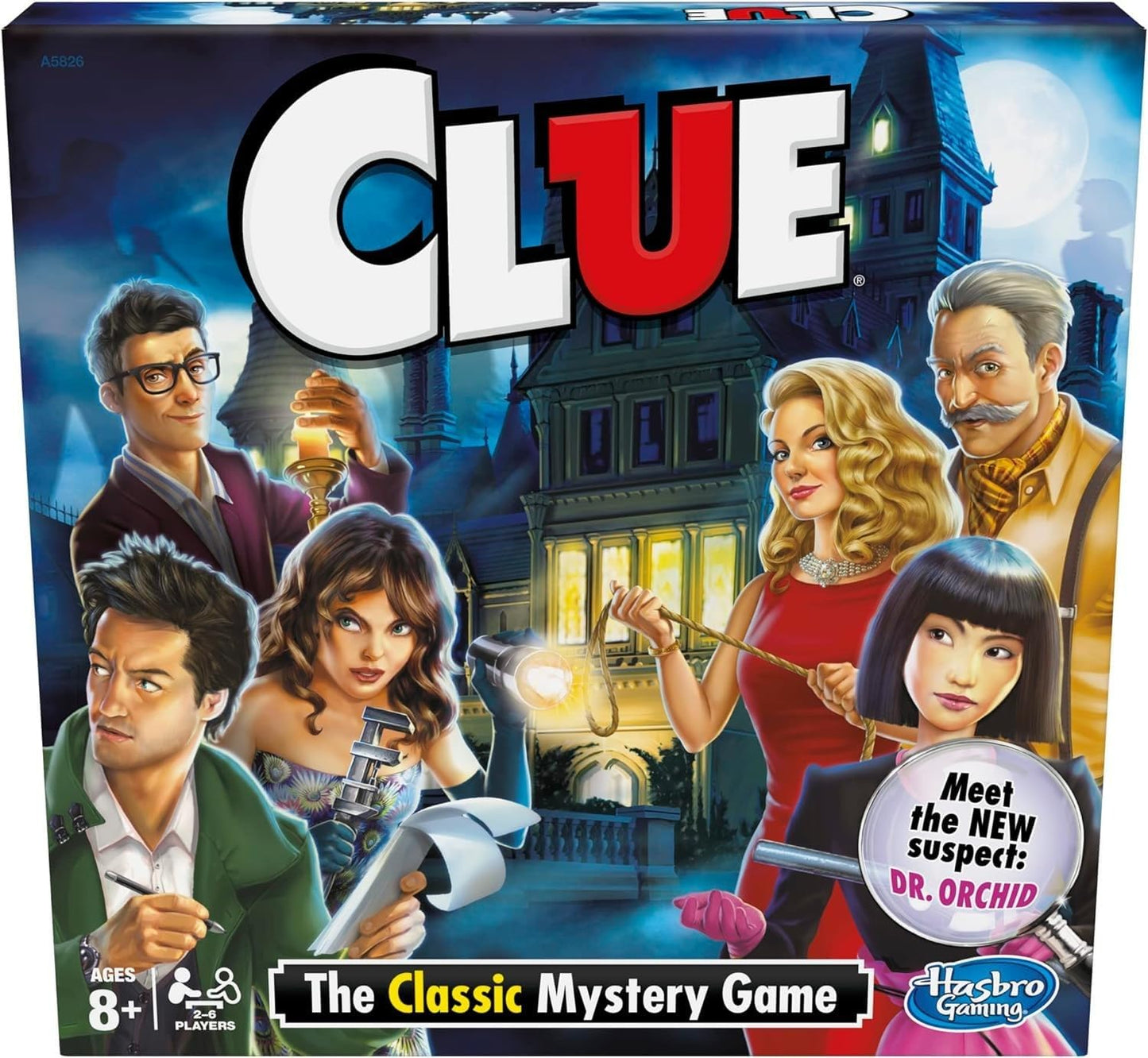
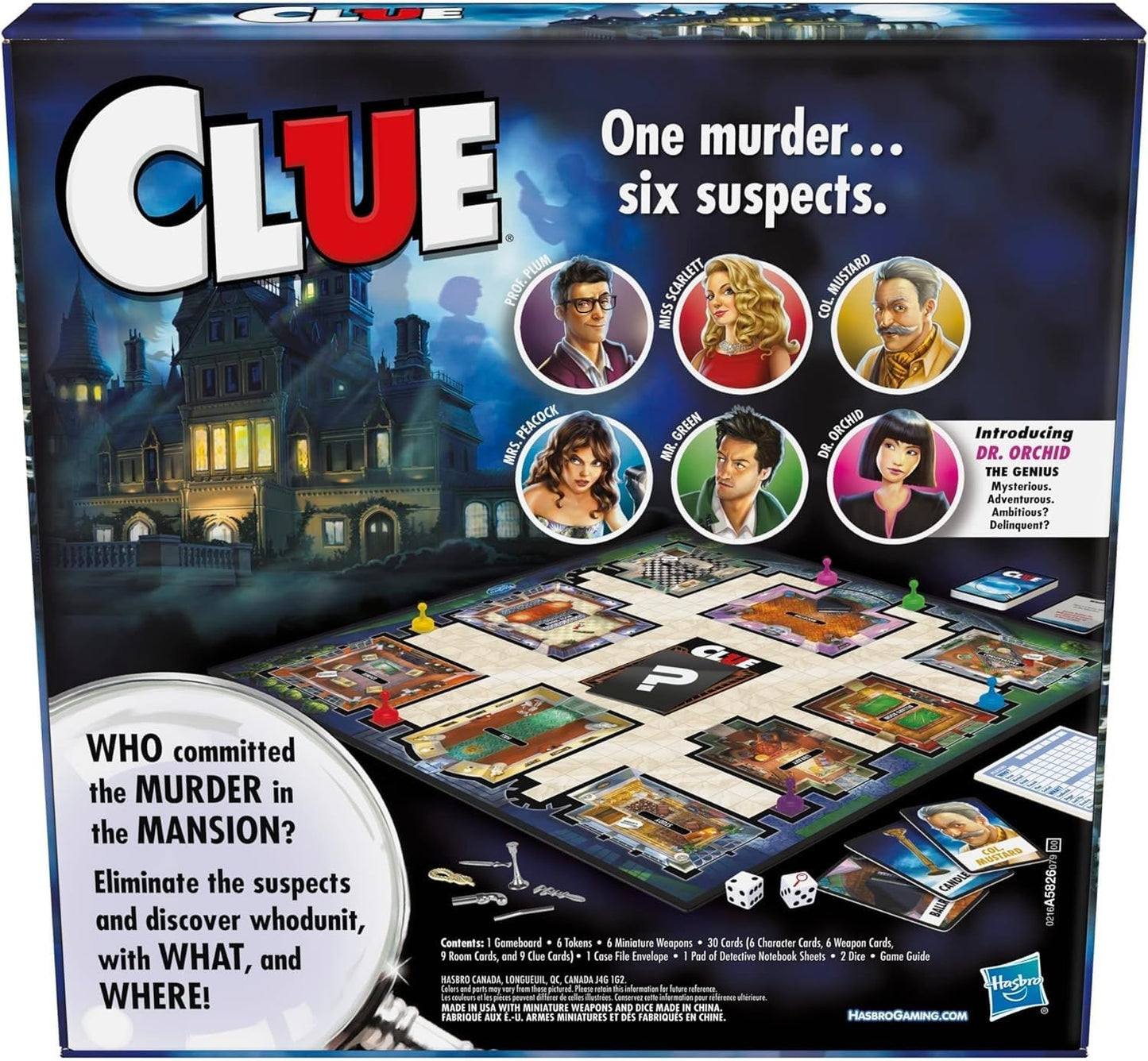
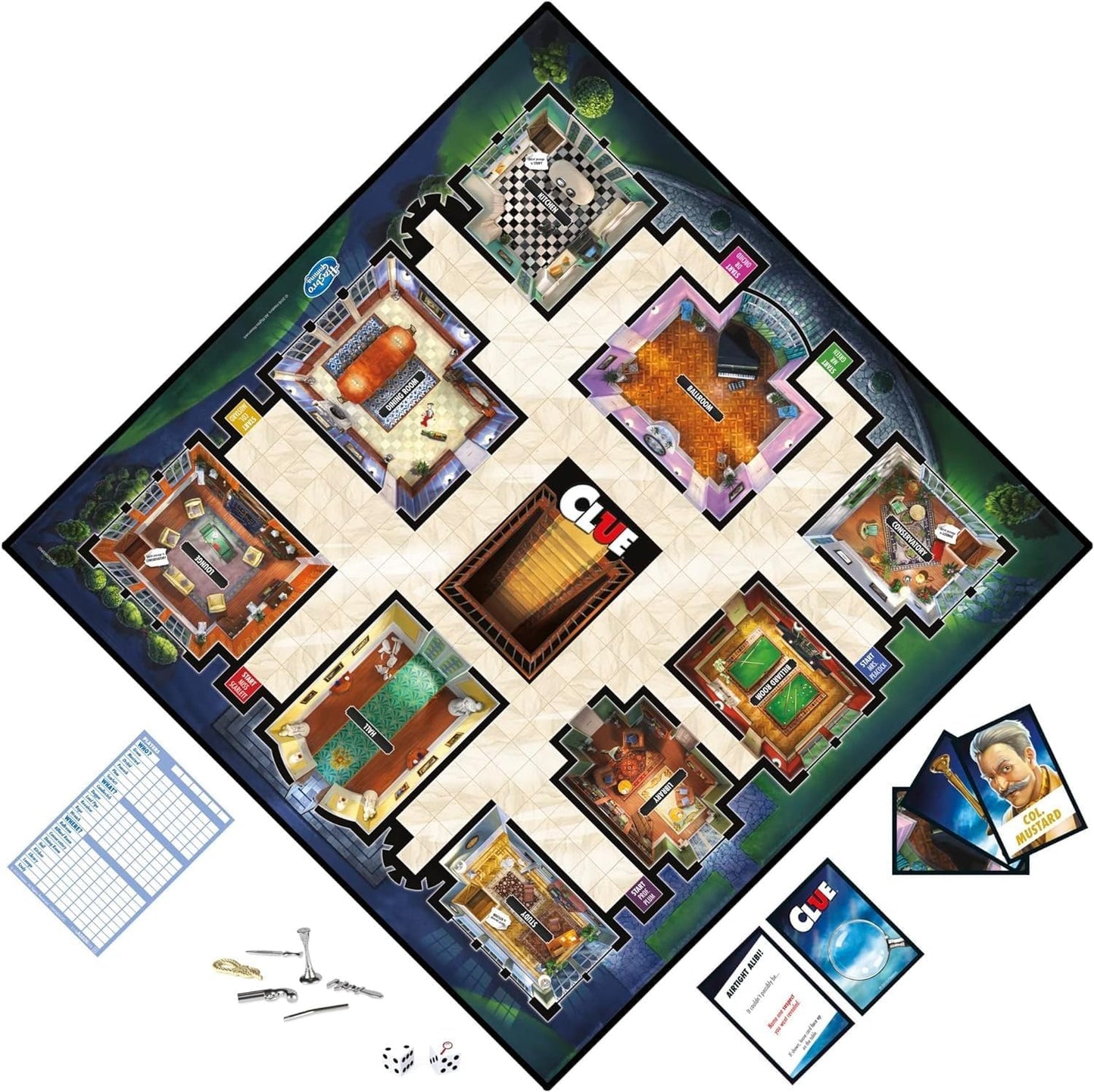
There's been a murder at the mansion, and everyone is a suspect! Clue invites players to become clever detectives in a classic game of mystery, deduction, and suspense. Was it Professor Plum in the library with the candlestick? Or perhaps Miss Scarlett knows more than she's letting on? Explore the mansion, question your opponents, collect evidence, and eliminate possibilities until you're ready to solve the ultimate mystery: who did it, where, and with what weapon? Perfect for family game nights, after-school programs, summer camps, and mystery-loving friends, this timeless detective game keeps everyone guessing until the final accusation!
Six Suspects. One Mystery. Can You Crack the Case?
Put on your detective hat and prepare to investigate! Clue is the classic murder mystery board game that challenges players to use logic, observation, and deductive reasoning to uncover the truth. Every game presents a mystery to solve, and every piece of information brings you one step closer to identifying the culprit.
The mystery begins with a murder inside a grand mansion. Players must determine three important details: which suspect committed the crime, which weapon was used, and where the murder took place. With multiple suspects, weapons, and rooms to investigate, solving the case requires careful thinking rather than lucky guesses.
As players move around the mansion, they make suggestions about possible combinations of suspects, weapons, and locations. Other players may be able to disprove those suggestions by revealing evidence, allowing detectives to eliminate possibilities from their investigation.
The real challenge is paying attention to what you learn and what your opponents reveal. A seemingly unimportant clue could become the missing piece that solves the entire mystery!
One of the most exciting parts of Clue is that every player is working with different information. You might know something your opponents don't, while another detective may have already uncovered a clue that changes everything. Players must use the evidence available to them to build a convincing theory before making their final accusation.
Unlike games that depend entirely on chance, Clue rewards observation, logical reasoning, and thoughtful decision-making. Players practice comparing information, identifying patterns, eliminating incorrect answers, and drawing conclusions from limited evidence.
The game also encourages reading comprehension, note-taking, memory, and strategic questioning. Each turn provides an opportunity to gather information and decide what to investigate next.
For schools and educational programs, Clue offers an entertaining way to introduce deductive reasoning and critical thinking. Students can practice distinguishing facts from assumptions, organizing information, and supporting conclusions with evidence.
After-school programs and summer camps can use Clue for small-group game sessions, rainy-day activities, and friendly mystery-solving competitions. The suspenseful storyline encourages discussion, cooperation in learning the rules, and good sportsmanship during competitive play.
Libraries and recreation centers can incorporate Clue into board game clubs, detective-themed events, and family activity programs. It's especially appealing to participants who enjoy puzzles, mysteries, and games that challenge their thinking skills.
At home, Clue makes family game night feel like a detective adventure. With different mystery solutions possible from game to game, players can return for another investigation without knowing exactly how the next case will unfold.
Designed for two to six players ages eight and up, Clue combines mystery, strategy, and friendly competition into an unforgettable tabletop experience. Gather your suspects, follow the evidence, and see who can solve the crime first!
Why Choose Clue?
- Classic murder mystery board game filled with suspense and surprises
- Challenges players to identify the suspect, weapon, and crime scene
- Designed for two to six players ages eight and up
- Encourages logical thinking and deductive reasoning
- Helps develop observation, memory, and analytical skills
- Promotes strategic questioning and evidence-based decision-making
- Encourages note-taking and information organization
- Engaging mystery storyline keeps players involved
- Different mystery solutions offer replay value
- Great for small-group activities and friendly competitions
- Ideal for classrooms, after-school programs, and game clubs
- A timeless favorite for family game nights and mystery enthusiasts
Teacher Tip
Turn Clue into a "Detective Thinking Lab" that challenges students to separate facts from assumptions! Before playing, explain the concept of deductive reasoning: using known information to eliminate possibilities and reach a logical conclusion. Have students divide their detective notes into three categories: suspects, weapons, and rooms. As the game progresses, encourage them to record confirmed information and cross off possibilities that have been disproven. Pause occasionally to ask questions such as, "What do we know for certain?" "What information are we still missing?" and "Which question would help us eliminate the most possibilities?" For an added challenge, invite students to explain the reasoning behind their final accusations without revealing their private evidence to opponents during gameplay. After the game, discuss how gathering reliable information helped solve the mystery and why making assumptions too early can lead to incorrect conclusions. This activity reinforces critical thinking, organization, observation, logical reasoning, and evidence-based decision-making while keeping students engaged in a suspenseful game. For younger participants, introduce the rules gradually and model how to use the detective notes before beginning.
Product Highlights
-
Game Type: Mystery, deduction, and strategy board game
-
Players: Two to six
-
Recommended Ages: Eight and up
-
Playing Time: 10 to 60 minutes, depending on players and gameplay
-
Objective: Identify the murderer, murder weapon, and location
-
Gameplay: Investigate rooms, make suggestions, gather evidence, and solve the mystery
-
Skills Practiced: Deductive reasoning, observation, memory, strategy, and critical thinking
-
Game Style: Competitive detective mystery
What's Included
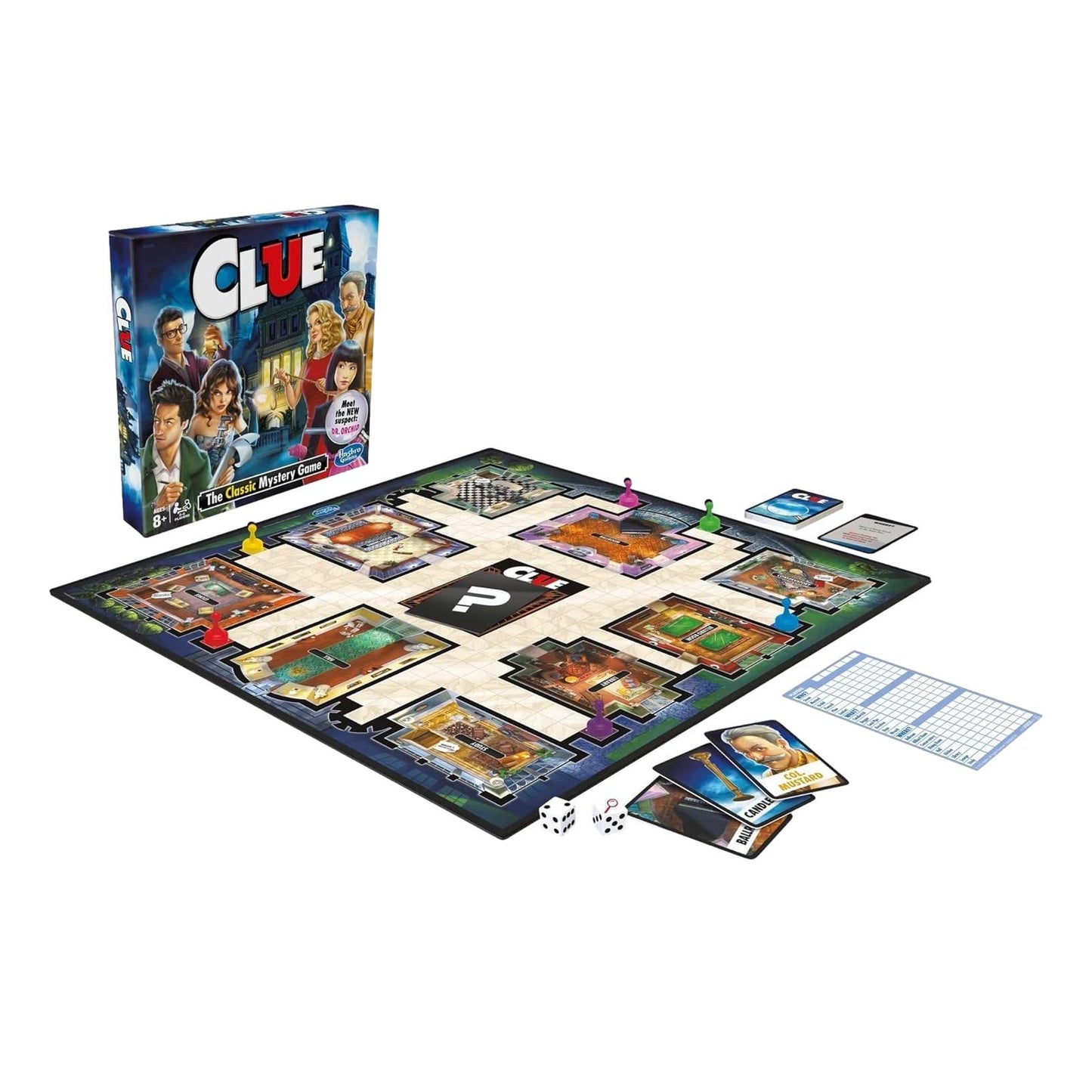
- 1 Clue game board
- Character playing pieces
- Miniature weapon pieces
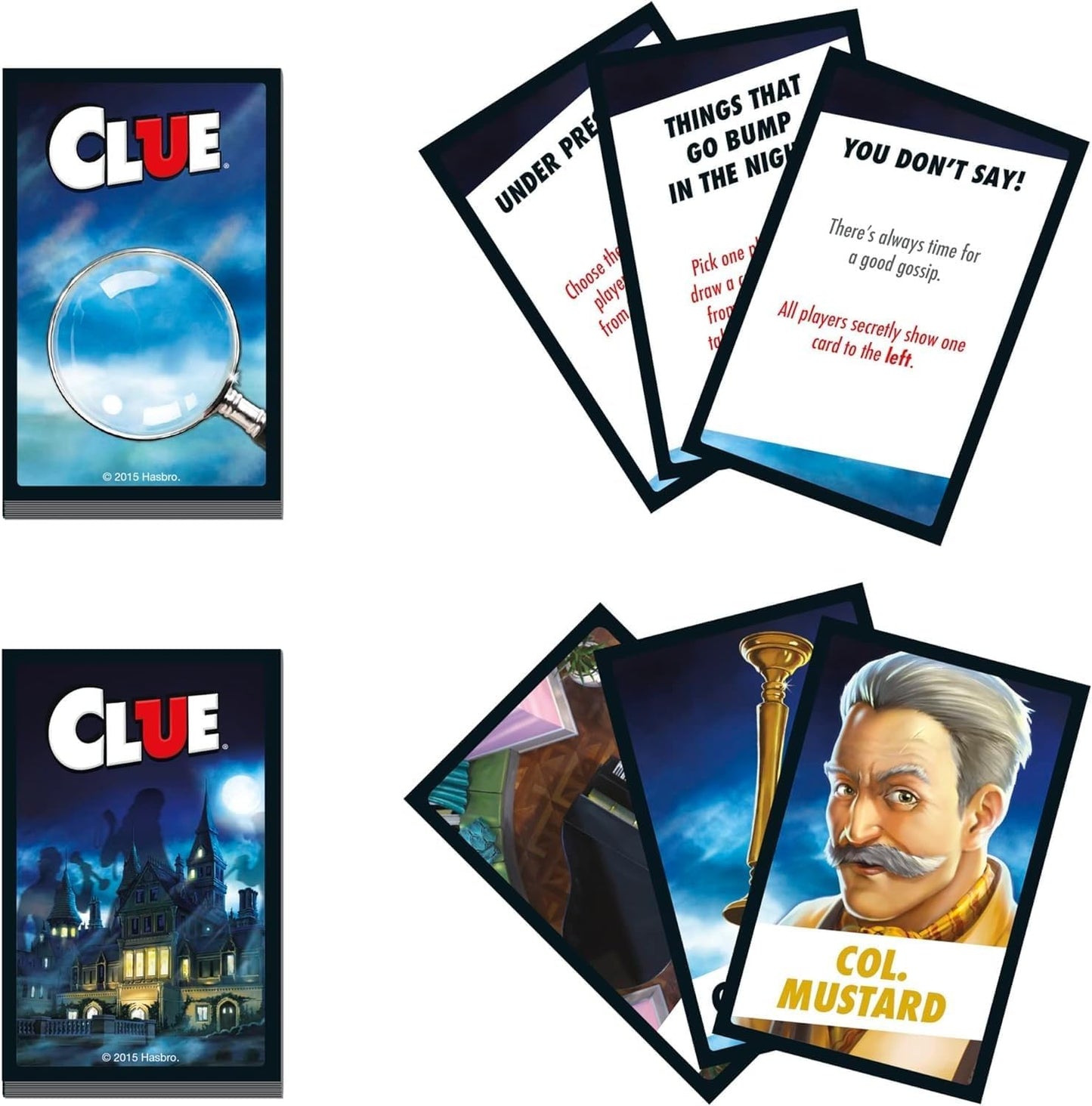
- Suspect, weapon, and room cards
- Mystery solution holder or revealing component, depending on edition
- Detective note sheets
- Dice
- Game instructions
Packaging and style may vary. Game components and special features may differ by edition.
How to Play Clue
Step 1: Prepare the Mystery. Set up the game board and playing pieces according to the included instructions. Secretly select the solution cards identifying the suspect, weapon, and room, then place them in the designated solution holder without revealing them to the players.
Step 2: Distribute the Evidence. Shuffle and distribute the remaining evidence cards according to the rules for your edition. Each player examines their cards privately to identify possibilities that can be eliminated.
Step 3: Start Investigating. Take turns moving around the mansion and entering rooms. Follow the movement rules for your version of the game.
Step 4: Make a Suggestion. When permitted, suggest a combination of suspect, weapon, and room. For example, "Was it Professor Plum with the candlestick in the library?"
Step 5: Examine the Evidence. Other players may be required to show a card that disproves your suggestion. Use this information to narrow down the possibilities.
Step 6: Keep Detective Notes. Record what you discover, eliminate incorrect possibilities, and look for patterns in the evidence. Pay attention to what other players suggest and reveal.
Step 7: Build Your Theory. Continue investigating until you believe you have identified the correct suspect, weapon, and location. Avoid rushing into an accusation without enough evidence!
Step 8: Make Your Final Accusation. When you're confident you've solved the case, announce your accusation and check the hidden solution using the method provided in your edition.
A correct accusation wins the game! If your accusation is incorrect, follow the included instructions for the consequences and remaining gameplay. Specific movement rules, special cards, and mystery-revealing features may vary by edition.
This Game Is Great For
-
Schools & Classrooms: Turn logical reasoning into an exciting investigation. Students practice evaluating evidence, organizing information, and drawing conclusions
-
After-School Programs: Keep young detectives thinking after the school day. Encourage problem-solving, observation, and friendly competition
-
Summer Camps: Add suspense to rainy-day activities. Organize small-group mystery games and detective-themed challenges
-
Libraries: Bring mystery stories to life through gameplay. Include Clue in detective-themed events, game clubs, and youth activities
-
Recreation Centers: Offer an engaging strategy game for group activities. Encourage participants to practice deduction and thoughtful decision-making
-
Senior Centers & Adult Game Groups: Enjoy a familiar mystery with plenty of mental challenges. Bring participants together for social gameplay and deductive puzzles
-
Homeschool Families: Explore evidence-based thinking through play. Practice logic, note-taking, and strategic questioning in an entertaining setting
-
Family Game Nights: Turn an ordinary evening into a detective adventure. Challenge family members and friends to uncover the truth before anyone else
Fun Ways to Make Mystery Night Even Better
-
Detective Tournament - Organize multiple rounds and see who can solve the most mysteries
-
Mystery-Themed Game Night - Create a detective atmosphere with themed decorations and imaginative introductions
-
Evidence Challenge - Encourage players to explain how confirmed clues helped them reach their conclusions after the game
-
Logic Lesson - Discuss the difference between a fact, a possibility, and an assumption
-
Detective Journal - Have participants practice organizing evidence and recording their reasoning
-
Family Rematch - Play again with a new solution and see whether different strategies lead to victory
-
Mystery Book Club Activity - Pair a game session with a discussion of clues and suspects from an age-appropriate mystery story
Explore More
Love games that challenge your thinking? Explore our Tabletop Games Collection for more classic favorites, strategy challenges, and family entertainment.
Looking for hands-on activities with an extra creative twist? Browse our Toy & Game Craft Kits for projects that combine making, playing, and learning.
For more creative activity inspiration, visit our Crafting Creativity Blog for classroom ideas, camp activities, and family fun.
The Mystery Is Waiting. Are You Ready?
Bring suspense, clever thinking, and unforgettable detective adventures to your next game night with Clue. This classic mystery board game challenges players to gather evidence, eliminate suspects, and solve a thrilling whodunit through logic and deduction.
Perfect for classrooms, after-school programs, summer camps, libraries, recreation centers, and family game nights, Clue makes every turn another opportunity to uncover the truth. Gather your fellow detectives, examine the evidence, and see who can crack the case first!
Packaging and style may vary.


 Click image to open expanded view

 Free shipping on orders $700 and above
 Free shipping on orders $700 and above