Ahoy, young shipbuilders! Get ready to build, launch, and set sail with the 3D Floating Foam Ship Craft Kit! Children can transform colorful foam pieces into their very own miniature sailing ships, complete with a hull, sail, and playful nautical details. But the fun doesn't stop when the building is finished. These lightweight foam ships actually float, turning a creative construction project into an exciting water-play adventure! Perfect for classrooms, after-school programs, summer camps, pirate-themed parties, and hands-on STEM activities, this craft combines building, imagination, and scientific discovery in one memorable experience.
Build a Ship, Catch the Wind & Let the Adventure Begin!
What could be more exciting than building your own ship and watching it sail across the water? This 3D Floating Foam Ship Craft Kit gives children the opportunity to create a miniature boat that becomes a floating toy when the project is complete.
Instead of simply coloring a picture of a boat, children work with individual foam pieces to construct a three-dimensional sailing ship. Each component contributes to the finished design, helping young builders understand how different shapes fit together to create a recognizable and functional object.
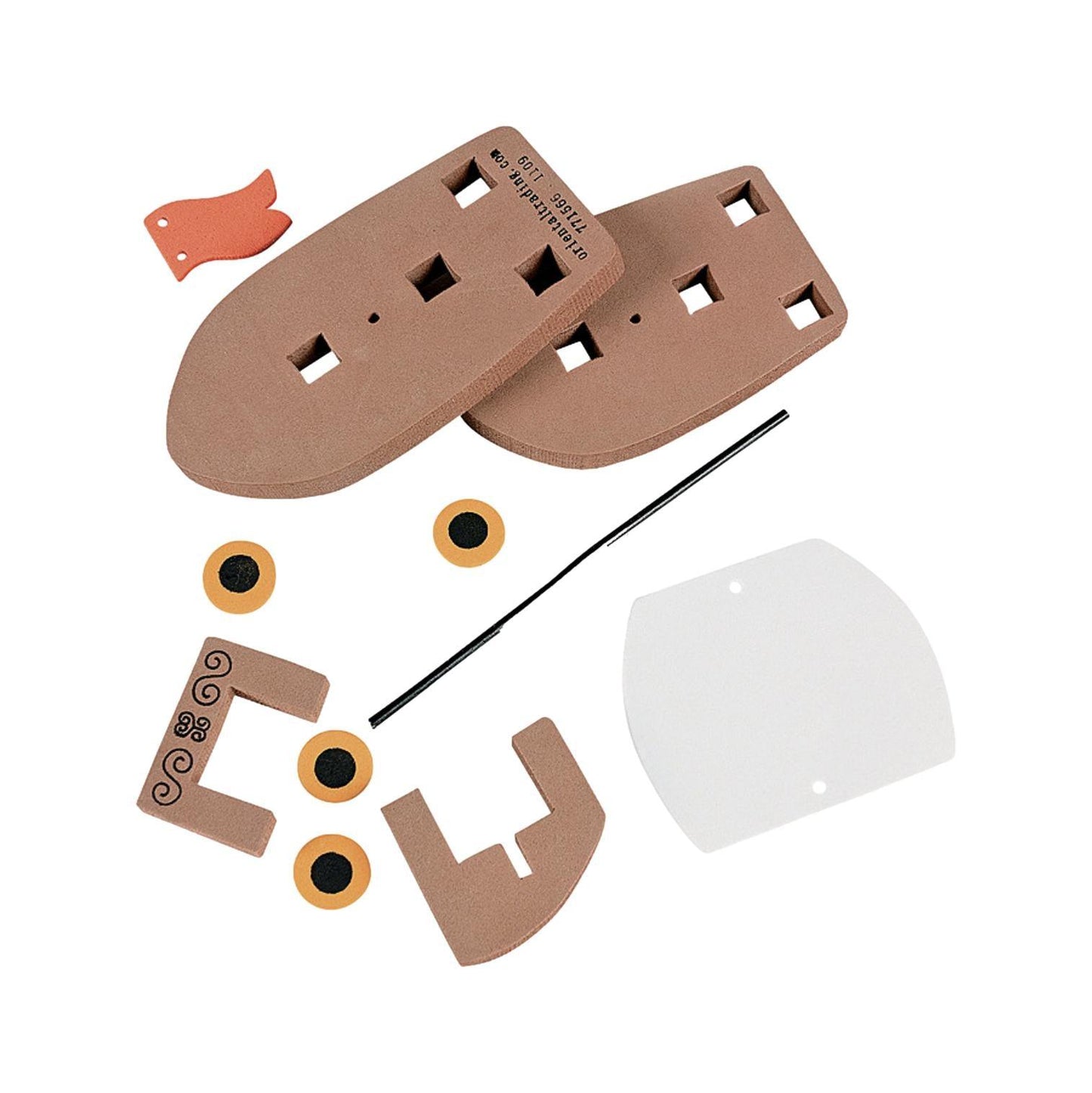
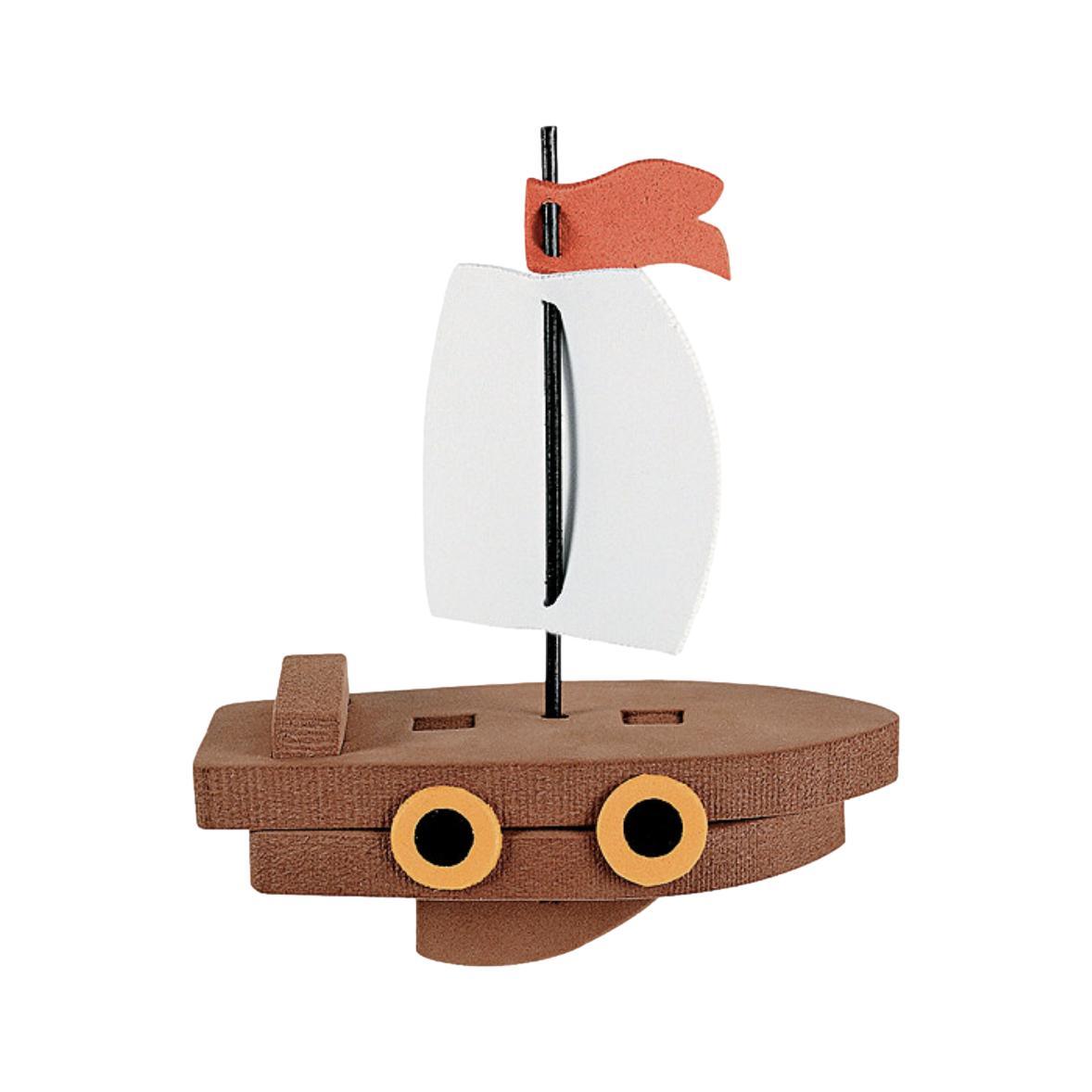
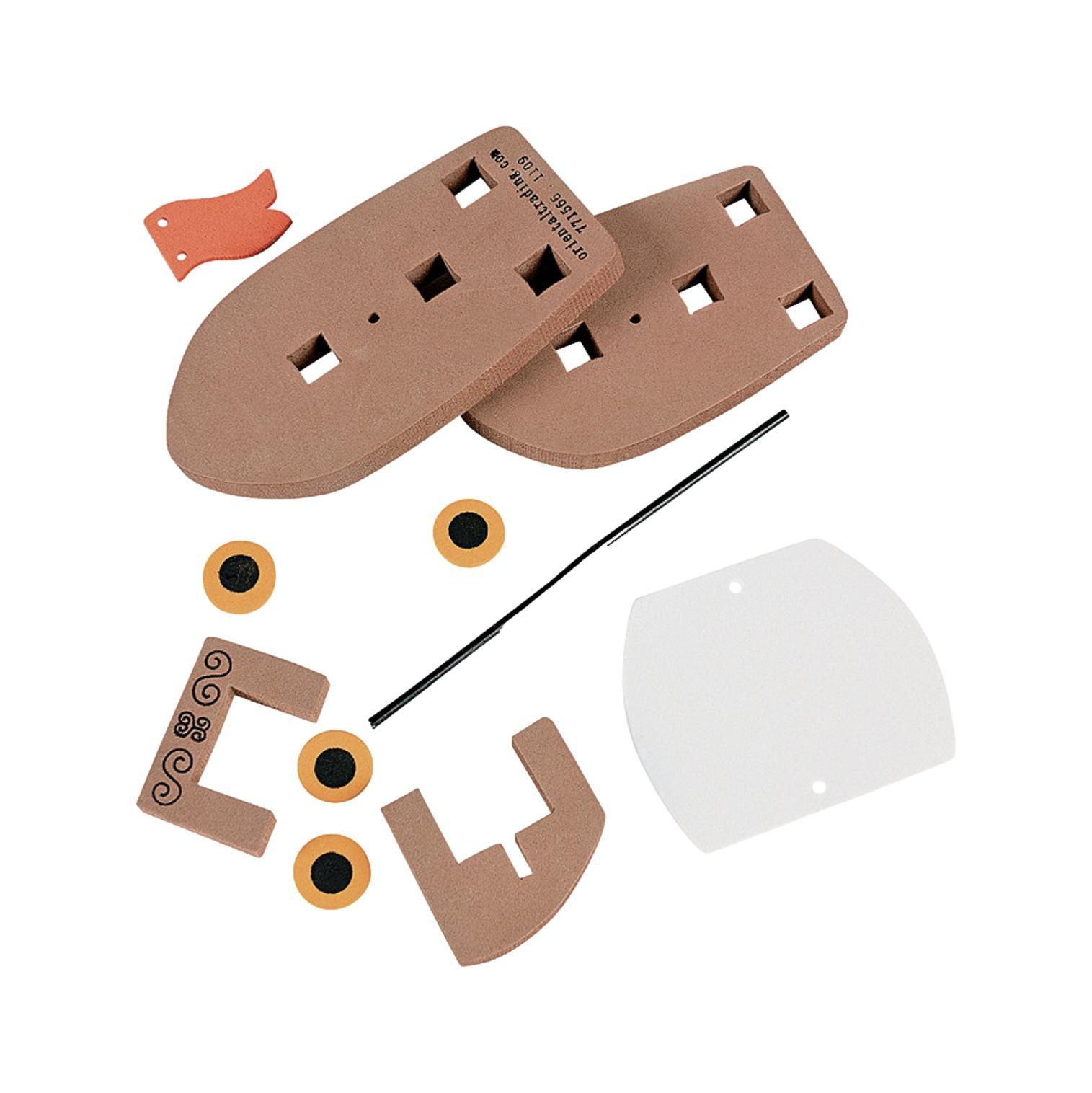
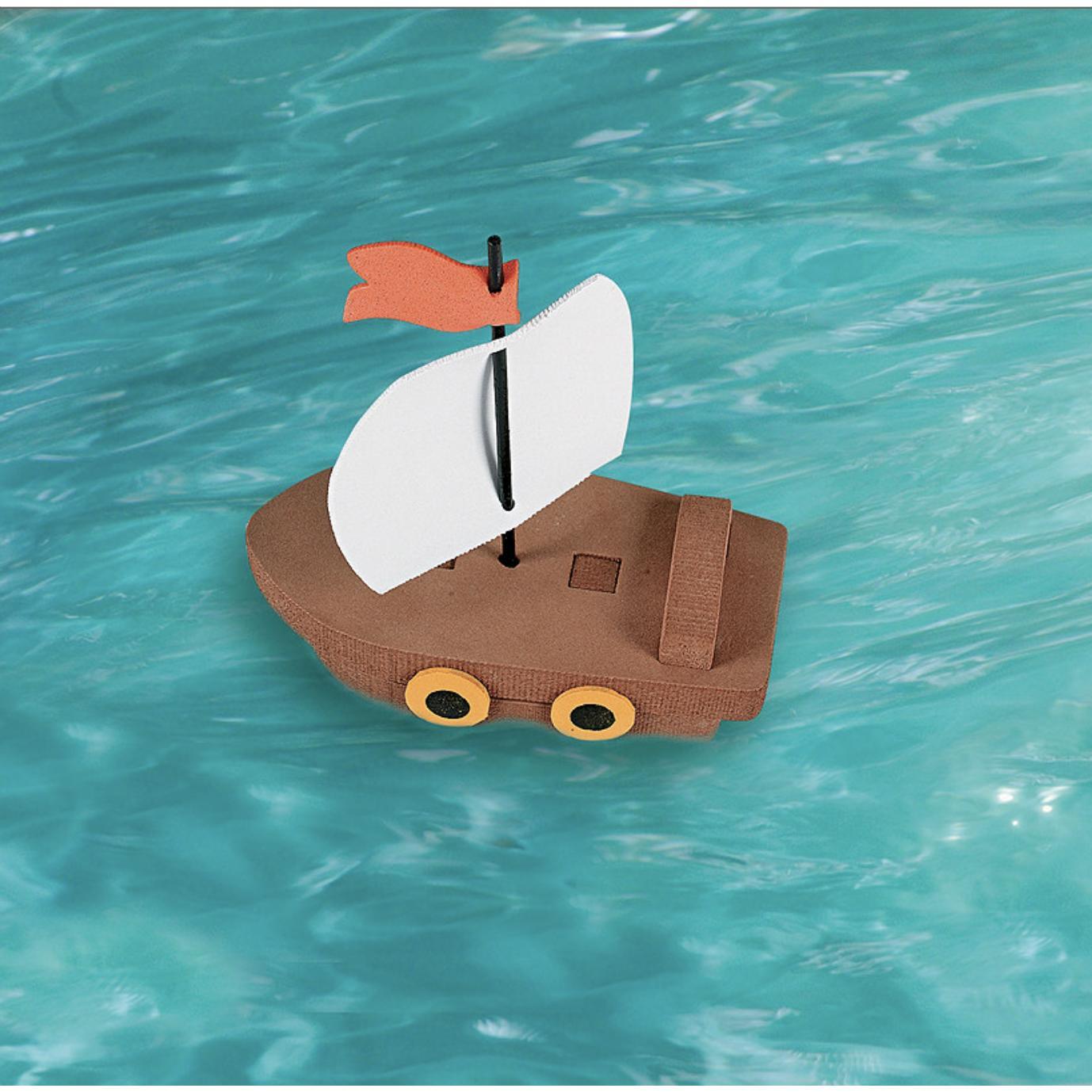
The ship features a brown foam hull with decorative details, a white upright sail, and a small flag that gives the finished project a charming nautical appearance. Its lightweight construction makes it suitable for supervised floating activities in shallow water.
Measuring 4¾" × 5½", the completed ship is compact enough for children to handle comfortably while providing an engaging three-dimensional project. Its size also makes it convenient for group craft tables and classroom water-testing stations.
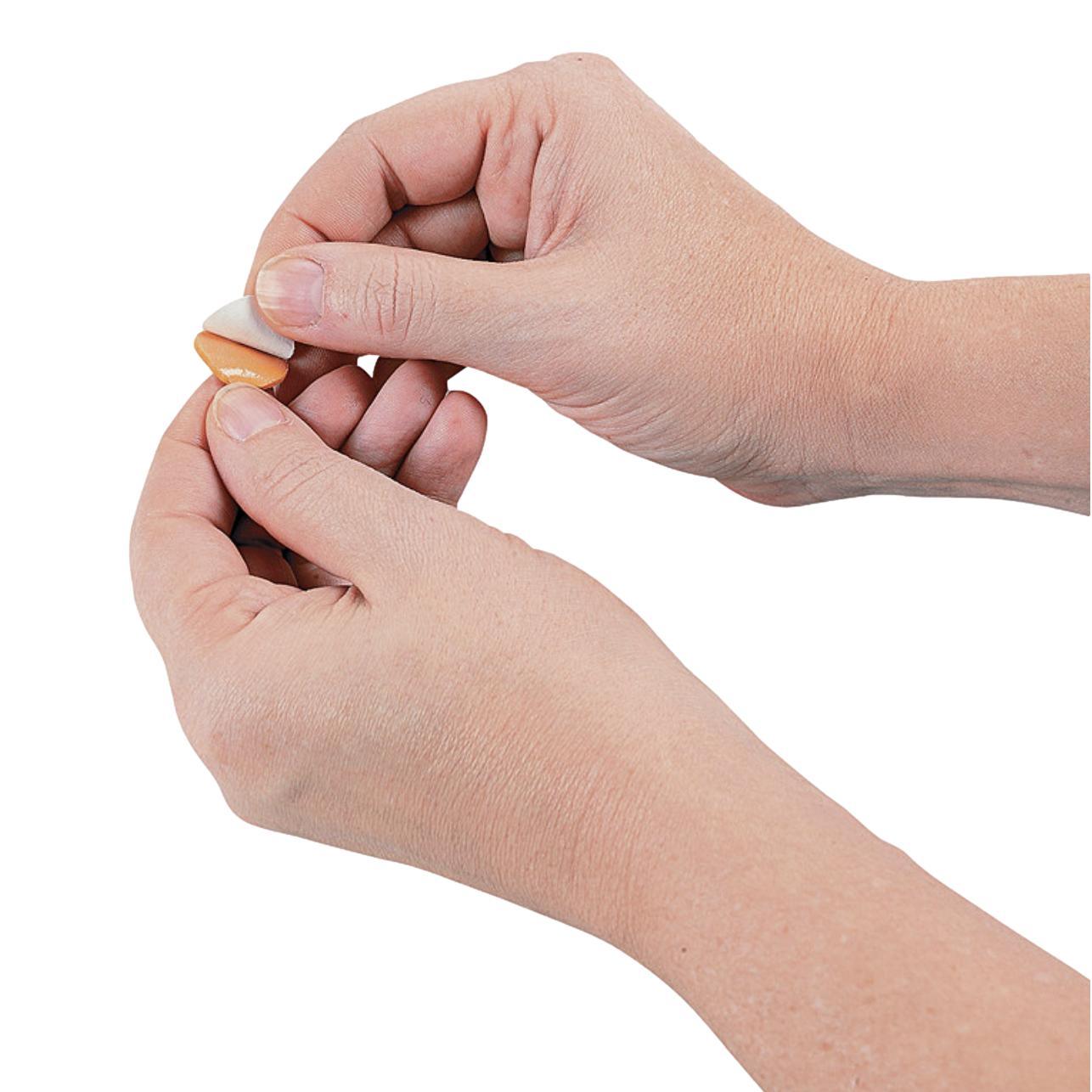
Each kit includes self-adhesive foam pieces and trim, allowing children to assemble the ship by positioning and pressing the components together. The peel-and-stick construction makes the activity approachable for younger participants while encouraging careful placement and attention to detail.
As children assemble their ships, they practice following directions, recognizing shapes, and understanding how individual components contribute to a larger structure. Aligning the foam pieces and securing decorative details also encourages fine motor coordination and hand-eye coordination.
Once the ships are assembled, the project transforms into an interactive STEM experience. Fill a shallow water bin, carefully place a completed ship on the surface, and watch what happens. Children can observe that the foam boat remains afloat instead of sinking to the bottom.
This simple experiment provides an opportunity to introduce buoyancy. Teachers can explain that whether an object floats depends on factors such as its overall density, shape, and the water it displaces. Young learners can explore these ideas through observation rather than complicated formulas.
The upright sail creates another opportunity for discovery. Invite children to gently blow toward the sail and observe whether the ship begins moving across the water. This introduces the idea that moving air can exert force on an object and cause motion.
Children can compare what happens when they blow gently, change the direction of the airflow, or move closer to the sail. They may notice that the ship travels differently depending on how the air reaches it, encouraging experimentation and thoughtful observation.
The floating activity also introduces basic ideas about balance and stability. Ask children to observe whether their ships remain upright, tilt, or turn while moving. Discuss how the position of the sail and the distribution of weight may influence the boat's behavior.
For elementary classrooms, this project offers a creative introduction to engineering and design. Students can examine the ship's different components, discuss their purposes, and make predictions about how the finished structure will perform on water.
Teachers can extend the lesson by comparing the foam ships with real sailboats. Discuss how sailors use wind to travel, why boats need stable hulls, and how ships have helped people explore and transport goods throughout history.
The project also connects naturally with geography and social studies. Children can imagine their ships traveling across oceans, visiting different countries, or exploring distant islands. A classroom map can turn the activity into a creative introduction to navigation and world geography.
For summer camps, these floating ships are especially exciting because the craft can be combined with outdoor water activities. Campers can assemble their boats during arts and crafts, then gather around a supervised water station for a friendly sailing challenge.
A pirate-themed camp week becomes even more memorable when every camper gets to build a ship. Encourage participants to invent ship names, create imaginary crews, and plan exciting adventures across make-believe seas.
After-school programs can use the activity to combine creative construction with cooperative learning. Children can help one another identify components, compare their finished ships, and take turns testing them in a shared water station.
For Vacation Bible School, the nautical design can complement lessons involving journeys, boats, oceans, and faith-based storytelling. Children can assemble their ships while discussing the theme of the day's lesson, then enjoy a supervised floating activity.
Libraries can pair the project with pirate adventures, ocean exploration books, or stories about sailing. After storytime, children can build a ship inspired by the adventure and imagine where their own vessel might travel.
The kit is also a fun choice for pirate-themed birthday parties. Guests can build their own miniature ships, give them creative names, and enjoy a supervised floating activity before taking their finished creations home.
With 12 individually packaged craft kits, organizing a group activity is convenient. Each participant receives the components needed for one ship, helping teachers and activity leaders distribute materials efficiently and keep the building process organized.
The self-adhesive pieces also reduce the amount of preparation required. For additional durability, especially when children plan to handle or float their ships repeatedly, an appropriate foam-compatible craft glue can be used to reinforce connections.
Children who enjoy personalizing their projects can add names, patterns, or small lightweight decorations to their ships. Encourage them to consider how extra materials might affect balance before launching their finished creations.
For a group display, arrange the completed ships together to create a miniature harbor. Add a paper ocean background, label each vessel, and invite children to share the story behind their ship's name.
The finished project offers more than a decorative keepsake. Children can enjoy the satisfaction of building something with their own hands and then watching it perform a real function. That connection between creativity and discovery makes the experience especially rewarding.
Whether you're organizing a classroom STEM lesson, planning a pirate-themed summer camp activity, or looking for an interactive craft at home, this floating foam ship kit offers a memorable combination of building, learning, and imaginative play. Gather your crew, assemble your fleet, and prepare for a voyage full of creativity!
Why Choose This 3D Floating Foam Ship Craft Kit?
- Creates a miniature three-dimensional sailing ship that actually floats on water
- Features a brown foam hull, white sail, flag, and decorative nautical details
- Self-adhesive foam pieces make assembly approachable for young builders
- Combines hands-on crafting with interactive water play and imaginative adventures
- Introduces STEM concepts such as buoyancy, wind, motion, balance, and stability
- Encourages fine motor coordination, sequencing, concentration, and problem-solving
- Offers opportunities for engineering discussions, predictions, and simple experiments
- Perfect for pirate adventures, ocean exploration themes, and nautical celebrations
- Finished ships can be used for supervised floating races and science challenges
- Individually packaged kits simplify distribution during group craft sessions
- Great for classrooms, after-school programs, summer camps, VBS, and family activities
- Recommended for children ages five and up
Teacher Tip
Transform this project into a "Will It Float? Sailboat STEM Challenge" that combines crafting, engineering, and scientific discovery! Begin by showing students the unassembled foam pieces and asking them to predict whether the completed ship will float. Discuss the differences between objects that float and objects that sink, then introduce simple ideas about buoyancy and how a boat's shape helps it stay on the water. Have students assemble their ships, paying attention to how the hull, sail, and decorative components fit together. Once the ships are complete and any added glue has fully dried, prepare a shallow water-testing station. Invite children to gently place their ships on the water and observe what happens. Next, challenge students to move their boats using only air by blowing toward the sails. Compare different blowing directions and distances to see how they affect movement. For a math extension, mark a starting line and measure how far each ship travels during a single attempt. Older students can record their observations, compare results, and discuss what they might change to improve performance. Finish by asking participants to explain what helped their ships float and move. This activity brings together creative construction, prediction, observation, measurement, problem-solving, and teamwork in one exciting hands-on STEM experience!
Product Highlights
-
Floating Ship Design – Completed foam boats can float on water
-
Three-Dimensional Construction – Individual foam components form a miniature sailing ship
-
Nautical Details – Brown hull, white sail, flag, and decorative trim
-
Self-Adhesive Foam Pieces – Peel-and-stick construction simplifies assembly
-
4¾" × 5½" – Finished ship dimensions
-
Lightweight Foam Material – Suitable for building and supervised floating activities
-
STEM Learning Opportunities – Explore buoyancy, wind power, motion, and balance
-
Fine Motor Development – Positioning and attaching pieces encourages careful hand movements
-
Individually Packaged – Convenient for group distribution and organized craft stations
-
Ages Five & Up – Recommended for young builders with appropriate adult supervision
-
12 Craft Kits – One floating foam ship project per individual kit
What's Included
12 individually packaged floating foam ship craft kits. Each kit includes self-adhesive foam pieces and trim for assembling one three-dimensional sailing ship.
Supplies You'll Need
The included self-adhesive foam pieces allow children to assemble their ships without additional adhesive, but keeping Foam Glue available is a smart choice for reinforcing connections and securing pieces that need extra support. For personalized ship names, stripes, and decorative details, use suitable Markers, testing them on a small piece of foam first. Children can also add nautical accents with lightweight Foam Stickers or create custom flags and decorations using Foam Sheets and Scissors. For the floating activity, prepare a shallow container of water and towels for cleanup. Keep decorations lightweight, avoid covering important connection points, and allow all added adhesive or ink to dry completely before launching the ships. Extra decorating materials are optional.
This Floating Foam Ship Craft Is Great For
-
Preschools & Kindergarten Programs: Introduce young builders to shapes, sequencing, and simple construction. With age-appropriate guidance, children can identify foam components, practice positioning pieces, and discover how individual shapes combine to form a floating ship
-
Elementary Schools: Bring buoyancy, wind power, and engineering concepts into the classroom. Students can assemble their boats, predict whether they will float, test them in water, and discuss how the hull and sail contribute to the finished design
-
STEM & Science Programs: Turn scientific predictions into exciting hands-on experiments. Participants can investigate floating and sinking, observe how moving air pushes the sail, measure travel distances, and compare their results
-
After-School Programs: Combine creative building with teamwork and interactive play. Children can work through the assembly process together, personalize their ships, and participate in supervised sailing challenges that encourage cooperation and problem-solving
-
Summer Camps: Make pirate weeks and water-themed camp activities unforgettable. Campers can build their own miniature fleets, invent ship names, create imaginary pirate crews, and enjoy friendly floating races during supervised water activities
-
Parks & Recreation Programs: Bring hands-on nautical fun to community craft workshops. Activity leaders can organize a shipbuilding station followed by a shallow-water testing area, creating an engaging experience for summer programs and special events
-
Vacation Bible School & Church Programs: Connect creative shipbuilding with stories about journeys, courage, and faith. Children can assemble floating boats during nautical-themed lessons and participate in activities inspired by appropriate Bible stories involving boats and water
-
Libraries & Community Centers: Bring pirate adventures and ocean exploration stories to life. Pair a nautical-themed storytime with a shipbuilding activity, then invite participants to imagine where their completed vessels might travel
-
Pirate-Themed Birthday Parties: Give every guest a shipbuilding adventure and a memorable take-home craft. Children can assemble and name their ships before enjoying a supervised sailing challenge or creating a miniature pirate harbor
-
Homeschool & Family Learning: Explore science and engineering through creative, screen-free play. Parents can guide children through construction, discuss why boats float, and experiment with wind-powered movement using a shallow water bin
-
Rainy Day Craft Activities: Turn an indoor afternoon into a miniature nautical adventure. Children can build and decorate their ships at the craft table before testing them in a supervised bathtub or shallow container
-
Team-Building Activities: Encourage cooperation, communication, and creative problem-solving. Small groups can compare assembly techniques, organize friendly boat challenges, and work together to create a shared fleet or harbor display
Creative Floating Ship Craft & STEM Activity Ideas
-
Pirate Ship Regatta – Set up a shallow watercourse and challenge children to move their ships toward a finish line using gentle breaths of air
-
Sink or Float Science Lab – Compare the floating foam ships with other safe objects and discuss why some materials sink while others remain on the surface
-
Wind-Powered Sailing Challenge – Experiment with blowing toward the sail from different directions and observe how the ship responds
-
Boat Balance Investigation – Observe how the ship sits on the water and discuss what might happen if weight is added unevenly
-
Design Your Pirate Fleet – Give each ship a creative name and imagine the adventures of its captain and crew
-
Floating Distance Experiment – Mark a starting point, move the ships using air, and measure how far each one travels
-
Build a Miniature Harbor – Arrange completed ships on a tabletop display with a handmade ocean, docks, and island scenery
-
Ocean Exploration Adventure – Use a world map to imagine sailing routes and learn about oceans, continents, and famous maritime journeys
-
Ship Name & Flag Design – Personalize each boat with a name and create a lightweight decorative flag that represents its imaginary crew
-
Sailing Storytime – Pair the finished craft with a pirate or ocean adventure book and invite children to create a story about their ship
-
Engineering Observation Journal – Have students draw their completed ships, record predictions, and describe what happened during water testing
-
Friendly Fleet Parade – Display all the completed ships together and invite children to introduce their vessels before a group launch
-
Pirate Treasure Voyage – Create imaginary islands and challenge children to guide their ships toward different destinations while practicing direction words and spatial awareness
How to Assemble Your 3D Floating Foam Ship Craft Kit
Step 1: Prepare Your Shipbuilding Station. Choose a clean, flat work surface and carefully open the individually packaged kit. Arrange the foam components so children can see the different pieces before beginning. Keep small decorative parts together to prevent them from getting lost.
Step 2: Identify the Ship Components. Locate the foam hull pieces, sail, flag, and decorative trim. Compare the individual pieces with the finished product image to understand how they will come together to form the miniature sailing ship.
Step 3: Examine the Hull Pieces. Find the main foam components that form the ship's body. Before removing the adhesive backing, arrange the pieces in their intended positions and check how they align. Explain that the hull is the part of the ship that supports the structure and helps it float.
Step 4: Assemble the Ship's Body. Following the kit's intended assembly arrangement, peel the backing from the appropriate self-adhesive foam pieces and press them into position. Work carefully so the pieces line up neatly and form a stable three-dimensional hull.
Step 5: Add the Decorative Hull Details. Attach the included trim and decorative components in their intended positions. Encourage children to notice how the smaller details make the foam construction look more like a real sailing ship.
Step 6: Position the Sail. Identify the white sail component and assemble or attach it according to the kit's design. Check that the sail is positioned upright and securely supported so it can catch moving air during the floating activity.
Step 7: Attach the Flag. Add the small flag to the appropriate part of the ship. Make sure it is securely positioned and does not interfere with the sail or the balance of the finished boat.
Step 8: Reinforce Connections if Needed. Examine the completed structure and gently check that the foam components are securely attached. If any connections need additional support, use a small amount of foam-compatible craft glue. Follow the adhesive manufacturer's directions and allow it to dry completely before water play.
Step 9: Personalize Your Ship. If desired, decorate the foam with suitable markers, lightweight foam stickers, or other small accents. Children can add a ship name, colorful stripes, or a special symbol for their imaginary pirate crew. Avoid heavy decorations that could make the ship unstable.
Step 10: Inspect Your Finished Ship. Place the assembled ship on a flat surface and check that the hull sits evenly and the sail remains upright. Make sure all adhesive and decorations are fully dry before moving to the floating activity.
Step 11: Prepare the Water-Testing Area. Fill a shallow container, water table, or kiddie pool with enough water for the ship to float freely. Position the container on a stable surface and have towels ready for cleanup. An adult should supervise the entire activity.
Step 12: Launch Your Foam Ship. Gently lower the completed boat onto the surface of the water and release it. Observe how the hull sits on the water and whether the ship remains upright. Invite children to describe what they notice.
Step 13: Experiment With Wind Power. Gently blow toward the sail and watch how the ship moves. Try blowing from different directions or distances to explore how moving air can push the boat across the water.
Step 14: Try a Floating Ship Challenge. Mark a starting line and invite children to guide their ships toward a designated destination. Compare how the boats move, discuss what affects their direction, and celebrate the different results.
Step 15: Dry & Display Your Ship. When the floating activity is finished, remove the boat from the water and gently dry it. Allow any remaining moisture to evaporate before storing the ship or displaying it as a nautical keepsake.
For group activities, prepare one completed sample and organize the foam components in assembly order. Young children may benefit from adult assistance when aligning pieces and attaching smaller decorations. Always supervise water activities, use shallow water in a controlled setting, and keep small components away from children under three. These foam ships are intended for supervised craft and play activities, not as flotation or water-safety equipment.
Explore More
Keep the nautical adventures going with our Boat Crafts Collection for additional sailing projects, ship-themed activities, and creative ocean adventures.
Looking for more colorful projects made with lightweight foam? Browse our Foam Crafts Collection for easy-to-organize activities that encourage hands-on construction and imaginative design.
Planning an ocean-themed activity? Explore our Foam Stickers Collection for decorative shapes that can add creative details to suitable craft projects.
For another dimensional ocean adventure, try our Shop All Crafts Collection to discover additional group projects for classrooms, camps, and after-school programs.
Find more creative STEM ideas, summer camp activities, and hands-on craft inspiration in the EconoCrafts Arts & Crafts Blog.
Ahoy, Captain! Your Floating Adventure Awaits!
Get ready to build, launch, and explore with the 3D Floating Foam Ship Craft Kit (12 Pack)! From assembling the miniature hull and upright sail to watching the completed ship float across the water, every stage of this project offers children a chance to create something exciting with their own hands. The finished ship becomes both a charming nautical keepsake and an interactive toy that encourages curiosity about buoyancy, balance, and wind-powered movement.
Perfect for classrooms, after-school programs, summer camps, Vacation Bible School, pirate-themed parties, and family craft adventures, these individually packaged kits make it easy to organize a memorable group activity. Gather your young shipbuilders, prepare the harbor, and get ready for a voyage filled with imagination, discovery, and hands-on fun!





 Click image to open expanded view

 Free shipping on orders $700 and above
 Free shipping on orders $700 and above